Posts

Integrating CBC Valves Into Smart Manufacturing Systems

Image
In today's rapidly evolving manufacturing landscape, the integration of advanced technologies has become imperative for companies seeking to remain competitive. One such technology that has revolutionized the manufacturing industry is the Computer Numerical Control (CNC) system. CNC machines have proven to be invaluable in terms of precision, accuracy, and efficiency. However, to further enhance automation and streamline processes, integrating CNC valves into smart manufacturing systems is a logical next step. In this blog post, we will explore the benefits and considerations of incorporating CNC valves into smart manufacturing systems, pointing towards a future of increased productivity and optimization. What Are CNC Valves? Before delving into their integration into smart manufacturing systems, let's first understand what CNC valves are. CNC valves are electromechanical devices designed to control the flow of various fluids, such as air, water, or hydraulic oil, in CNC machi...
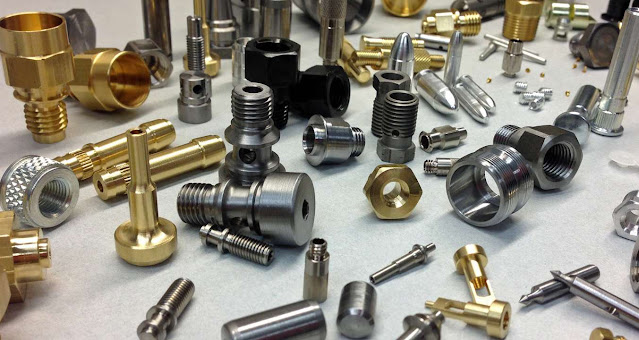
Understanding High Precision Turned Components

Image
What Exactly Are High Precision Turned Components? High precision turned components refer to intricate parts that are manufactured through precision turning processes. Precision turning, also known as CNC turning, is a subtractive manufacturing technique used to shape and create cylindrical parts with high accuracy and tight tolerances. In this process, a lathe machine holds and rotates the workpiece while a cutting tool removes excess material to achieve the desired shape. Where are Precision Turned Components Parts Needed? Precision turned components find applications in various industries where accuracy and reliability are crucial. Some common sectors that require precision turned components include: Aerospace: Precision turned components are used in aircraft engines, landing gear systems, control systems, and hydraulic components. Automotive: Precision turned parts are found in engines, transmissions, suspension systems, fuel systems, and steering components. Medical: Precision ...

How Do Ultrasonic Cleaners Work? How to Identify Quality Differences in Ultrasonic Cleaners

Image
Ultrasonic cleaning is a highly effective method used in various industries to remove dirt, grime, and contaminants from delicate and hard-to-reach surfaces. It utilizes high-frequency sound waves to create tiny bubbles, known as cavitation bubbles, which generate intense scrubbing action. In this blog post, we will delve into the working principle of ultrasonic cleaners, provide tips on identifying quality differences in ultrasonic cleaners , and explore the unique features of Best Technology's ultrasonic cleaners. How do ultrasonic cleaners work? Ultrasonic cleaners consist of three primary components: a tank, transducers, and a cleaning solution. The tank holds the cleaning solution, which is typically a mixture of water and a specialized detergent or solvent. The transducers are attached to the tank and convert electrical energy into high-frequency sound waves. When the ultrasonic cleaner is turned on, the transducers emit high-frequency sound waves that create compression wave...

Exploring The Diversity Of Materials In Precision Turned Components

Image
Welcome to the fascinating world of precision turned components, where every detail matters. At the heart of these components is the choice of material, which can make or break their performance. Precision turned components are essential building blocks in manufacturing, providing critical functions such as motion control and power transmission. Understanding the diversity of materials available for these components is crucial to achieving the desired outcomes. Metals such as steel, aluminum, and brass are some of the common materials used in precision turned components. Each one has unique properties that make it ideal for specific applications. Let's dive deeper into the world of material diversity in precision turned components, and explore its benefits and challenges. Ready to explore with us? Materials used in precision turned components Precision turned components are essential parts of various industries, serving different functions. These components are typically made from...

Aerospace CNC Machining: A Complete Guide To Precision CNC Machining

Image
In the fast-paced world of aerospace engineering, precision is paramount. The components used in aircraft and spacecraft must meet stringent quality standards to ensure safety, efficiency, and reliability. That's where CNC machining comes into play. CNC (Computer Numerical Control) machining is a cutting-edge technology that has revolutionized the manufacturing processes in various industries, including aerospace. In this comprehensive guide, we will delve into the world of aerospace CNC machining, exploring its applications, benefits, and the critical role it plays in the aerospace industry. What is CNC Machining? CNC machining is a subtractive manufacturing process where computer-controlled machines precisely remove material from a workpiece to create a desired shape or part. Unlike conventional machining methods, CNC machining utilizes advanced software and computerized controls to guide the cutting tools with exceptional accuracy and repeatability. This level of precision make...

How A Generator Produces Electricity: Understanding The Parts And Processes Involved

Welcome to the world of generators - the lifeline of electricity! A generator is a device that converts mechanical energy into electrical energy. Its importance cannot be overstated, as it is a crucial component in generating power for homes, businesses, and remote sites. In this blog, we'll take a look at the various parts that make up a generator and the processes involved in producing electricity. So, join us on this exciting journey and let's dive in to explore the fascinating world of generators! Generator Parts The stator is the stationary component of the generator that houses the copper windings. The rotor, on the other hand, is the rotating component of the generator and is responsible for generating the magnetic field. The exciter is a small generator that creates the direct current that is used to power the rotor. And last but not least, the cooling system helps dissipate the heat generated during operation through cooling fins or a water-cooled jacket. Each of thes...

CNC Precision Machining: Everything You Need To Know

Image
Table Of Content What is CNC Precision Machining? Tolerance of CNC Precision Machining Types of Precision CNC Machining Equipment CNC Precision Machining Applications Advantages of High Precision CNC Machining How to Carry Out Precision Machining FAQs CNC precision machining is a manufacturing process that involves the use of computer-controlled machines to produce highly precise and complex parts and components. This technology has revolutionized the manufacturing industry by enabling the production of high-quality parts with greater speed and accuracy. In this article, we will delve into the details of CNC precision machining and explore its applications, advantages, and equipment. What is CNC Precision Machining? CNC stands for Computer Numerical Control. CNC precision machining is a process that involves using computer-controlled machines to manufacture precise and complex parts and components. The process involves feeding a set of instructions, known as G-code, into the CNC machi...